
Heavy rain in the Lower Mainland: how to keep water out of the basement
By DrainX Plumbing · Updated
Short answer
Before the heavy rain, clean the gutters, point downspouts at least six feet from the house, clear the storm drain on your street and have old perimeter drains flushed. Make sure no downspout or foundation drain runs into the sanitary sewer. Check whether your home insurance includes sewer backup and overland flood cover, since standard policies usually don't.
Why does heavy rain flood basements in the Lower Mainland?
Because a lot of water arrives at once, and every weak point around the house gets tested together. The atmospheric river of October 18 to 20, 2024 caused more than $110 million in insured damage in southern BC, according to the Insurance Bureau of Canada. Coquitlam, Burnaby, West Vancouver, North Vancouver and Surrey were among the places hit, with sewer backups and flooded basements, roads and parking garages.
Water gets into a basement in three main ways: through the ground beside the foundation, through window wells and doors, and back up through the floor drain from the sewer. Each one has its own fix.
What should you check before the rain starts?
Go round the outside of the house on a dry day:
- Gutters. Clean the gutters and downspouts at least once a year, and again after the leaves drop. The Insurance Bureau of Canada gives once a year as the minimum.
- Downspouts. Make sure each one empties at least six feet (about 1.8 m) from the basement wall, onto a splash pad or the lawn. Surrey asks homeowners to point downpipes onto splash pads.
- The ground. The soil next to the house should slope away from it, so rain runs off rather than toward the foundation.
- Window wells. Clear out leaves and keep water from pooling against basement windows.
- The street drain. Clear leaves off the storm drain or catch basin in front of your house. Surrey asks residents not to rake or blow leaves onto the road, because it causes flooding.
- Ditches and culverts. If your property has an open ditch or a culvert, keep it clear.
How do perimeter drains keep a basement dry?
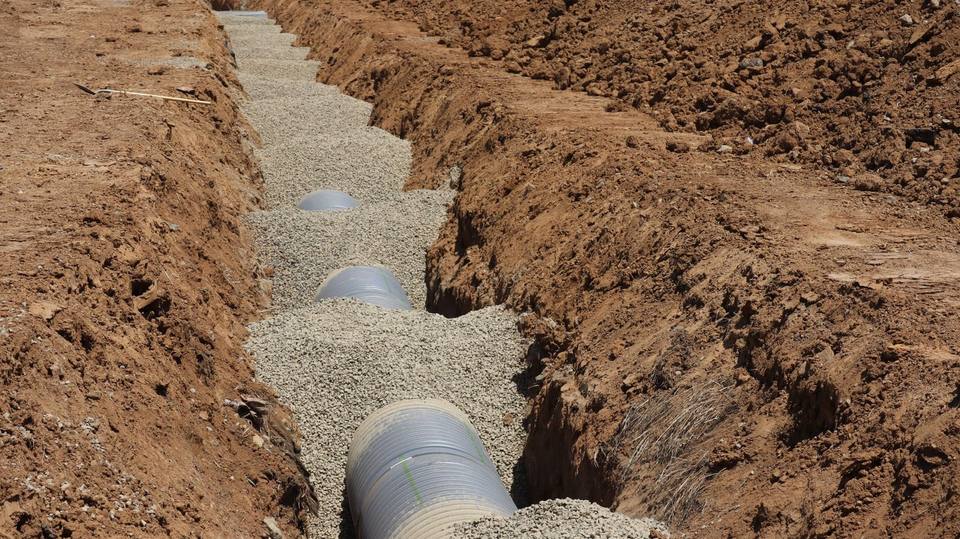
Perimeter drains are perforated pipes laid along the bottom of the foundation. They collect the water that soaks into the ground beside the house and carry it away before it can push through the basement walls. Surrey notes that most homes have them, that they need flushing from time to time, and that very old ones may need replacing.
When perimeter drains clog with silt or roots, the water has nowhere to go but in. Damp patches low on the basement walls, a musty smell after rain, or water seeping where the wall meets the floor all point to them. Our guide on what a perimeter drain is explains how they work and how they’re checked.
Can heavy rain make the sewer back up into the house?
Yes. In older areas, rainwater and sewage can share pipes, and rain also gets into sanitary sewers through cracks and wrong connections. Metro Vancouver calls this inflow and infiltration. When the pipes fill, sewage can come up through the lowest drain in the house.
Metro Vancouver asks homeowners to:
- Make sure downspouts and foundation drains aren’t connected to the sanitary sewer pipe.
- Have their pipes camera inspected by a plumber at least once a decade.
- Fix or replace old or damaged pipe, especially combined sewer lines.
- Avoid planting water-loving trees or shrubs over the sewer line or drain pipes.
The Insurance Bureau of Canada also suggests a backwater valve where your municipality recommends one. It lets water leave the house but closes if sewage starts flowing back in.
Does home insurance cover a flooded basement?
Often not without extra cover. The Insurance Bureau of Canada says damage from sewers and drains backing up is typically not covered by a standard home policy, and neither is overland flooding. Both are offered as optional coverage, and they are often sold together. Check your policy before the rainy season, and ask your broker if either is missing.
What should you do when water starts coming in?
- Stay away from water near outlets, the electrical panel or the furnace.
- If it’s coming up through a floor drain, stop using water in the house. Every flush and shower adds to it.
- Move what you can off the floor, and take photos for your insurer before cleaning up.
- Call a plumber. In Surrey, flooding on City property can be reported at 604-591-4152 on weekdays from 8:30am to 4pm, or 604-591-4431 on weekends.
Our guides on a basement floor drain backing up and what to do in a sewer backup cover the next steps.
When to call a plumber
Call a plumber when:
- Water comes up through the basement floor drain or the lowest toilet.
- The basement walls are damp low down after every heavy rain.
- Your perimeter drains haven’t been flushed in years, or you don’t know where they run.
- You aren’t sure whether a downspout or foundation drain is tied into the sewer.
- You want a camera inspection before the rainy season.
DrainX cleans and repairs perimeter drains, clears and inspects sewer lines, and comes out 24/7 when the water is already in. Tell us where the water is coming in and whether it’s clean water or sewage.
Sources
- Insured damage from October storms in Southern B.C. surpass $110 million , Insurance Bureau of Canada
- Water Damage and Flood Protection , Insurance Bureau of Canada
- Flooding prevention tips for homeowners , City of Surrey
- Reducing Water in the Sewer System , Metro Vancouver