
What is a perimeter drain? Signs of failure and cleaning
By DrainX Plumbing · Updated
Short answer
A perimeter drain, also called drain tile, is a ring of perforated pipe beside the footing of your foundation. It collects groundwater and rain and sends them to the storm sewer, often through a sump. Leaves, silt and roots block it over time. Surrey and Burnaby both tell homeowners to inspect, flush or clean these drains periodically.
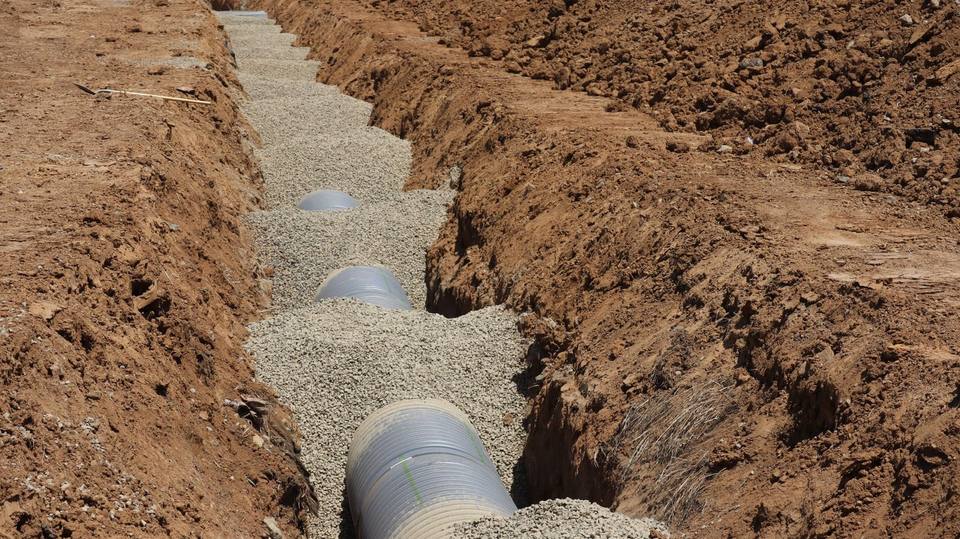
What is a perimeter drain?
A perimeter drain is a line of perforated pipe buried around the outside of a house, beside the footing of the foundation. Water in the soil seeps into the pipe through the holes and runs away from the house before it can press against the basement walls. The City of Surrey says most homes have perimeter drains installed slightly below the house foundation.
Is drain tile the same as a perimeter drain?
Yes. Drain tile, weeping tile, foundation drain and perimeter drain are names for the same system. “Tile” comes from older houses, where the drain was built from short sections of clay or concrete pipe laid end to end. Newer houses use perforated plastic pipe. The clay and concrete kind has a joint every short section, and each joint is a place for roots and silt to get in.
What does a perimeter drain do?
A perimeter drain keeps groundwater and rain from building up against the foundation. Surrey describes the drains as collecting water from your house and property and directing it to the City storm sewer. The City of Burnaby gives the same description of the pipes around or below a house’s foundation.
When the drain works, you never think about it. When it is blocked, water has nowhere to go and finds its way through cracks, the joint between the wall and the floor, or window wells.
Where does the water from a perimeter drain go?
On most houses it runs to a sump, then out to the storm sewer. The City of Vancouver describes a sump as a round or square concrete chamber that collects rainwater from gutters and drain tiles before sending it to the sewer. It can be in the basement, the crawl space or the yard.
That sump is not the same thing as a sump pump. Where the sump sits too low to drain by gravity, a pump in the pit lifts the water up and out.
The sump is yours to look after. Surrey says window wells and foundation perimeter drains connect to the property’s storm sump, and that private cleanouts and storm sumps are the homeowner’s responsibility.
What are the signs a perimeter drain is blocked?
Water showing up inside or pooling outside after heavy rain is the main sign. Look for:
- Damp patches or water along the base of basement walls after a storm.
- White, chalky staining on the inside of foundation walls.
- A musty smell in the basement that gets stronger in wet weather.
- Puddles that sit against the foundation long after the rain stops.
- A sump that is overflowing, or one with silt and sludge built up in the bottom.
Vancouver’s guide to water problems lists an overflowing stormwater sump, and water seeping through basement walls and pooling on the floor, as problems to call a plumber about.
What blocks a perimeter drain?
Leaves, pine needles, silt, dirt and roots are the usual causes. Surrey and Burnaby both name that same list. Silt washes in through the holes a little at a time, and roots follow the water into the pipe and grow there.
Roof water makes it worse. Surrey explains that if your downpipes disappear into a hole near the foundation, they probably feed the perimeter drain, and that the extra flow can overload it and flood the house. On old clay or concrete tile, sections can also shift or collapse, which blocks the line completely.
How often should perimeter drains be cleaned?
There is no official number of years. Surrey says the drains need to be flushed or cleaned periodically. Burnaby says to clean them often and to inspect, flush or clean them periodically. Neither city’s guidance sets a fixed interval.
The right interval depends on the house. A camera inspection shows how much silt and root is in the pipe, and that tells you how soon it will need doing again. Houses with large trees close by, older tile or downpipes still tied into the drain fill up faster. The best time to look is late summer or early fall, before the heavy rain arrives.
How is a perimeter drain cleaned?
A plumber gets into the line through a cleanout or the sump, looks inside with a camera, then flushes it with a water jet. The jet breaks up silt and cuts through small roots, and the loosened material is washed to the sump and removed. A second pass with the camera confirms the pipe is clear and shows any section that has cracked, sagged or collapsed.
If the house has no cleanouts, the plumber may need to install access points first. Damaged sections can’t be fixed by cleaning. They have to be dug up and replaced.
How long do perimeter drains last?
There is no fixed lifespan. It depends on the pipe material, the soil and what is growing near the house. Both cities accept that the drains wear out: Surrey says very old drains may need to be replaced, and Burnaby tells owners of old ones to consider replacing them. A camera inspection is how you find out which side of that line yours is on.
Should downspouts connect to the perimeter drain?
Preferably not. Surrey and Burnaby both recommend pointing downpipes onto splash pads so roof water soaks into the lawn and garden. Burnaby adds that you should make sure the water doesn’t flood onto your neighbour’s property.
Two more sources agree. The Insurance Bureau of Canada advises disconnecting downspouts that run into weeping tile, and extending them at least six feet from the basement wall. Metro Vancouver asks owners to make sure downspouts and foundation drains are not connected to the sanitary sewer pipe.
When to call a plumber
Call a plumber when:
- Water comes into the basement during or after heavy rain.
- The sump is overflowing or full of silt.
- You’ve bought an older house and don’t know the condition of the drain tile.
- It has been years since anyone looked inside the drains, and there are large trees near the house.
DrainX cleans and repairs perimeter drains and inspects them by camera. Tell us where the water is showing up and whether it follows the rain.
Sources
- Flooding Prevention Tips for Homeowners , City of Surrey
- Flood Prevention , City of Burnaby
- Find your water or sewer connection , City of Vancouver
- Fix leaks, floods, and sewage problems , City of Vancouver
- Sanitary Sewer Maintenance for Property Owners , City of Surrey
- Reducing Water in the Sewer System , Metro Vancouver
- Water Damage and Flood Protection , Insurance Bureau of Canada