
Tree roots in your sewer line: signs, fixes and who pays
By DrainX Plumbing · Updated
Short answer
Tree roots get into a sewer line through joints and cracks, then grow into a mass that catches paper and grease. Signs include slow drains through the whole house, gurgling toilets and backups that return every few months. A plumber cuts the roots out and checks the pipe by camera. Cutting alone is temporary, because roots grow back.
How do tree roots get into a sewer line?
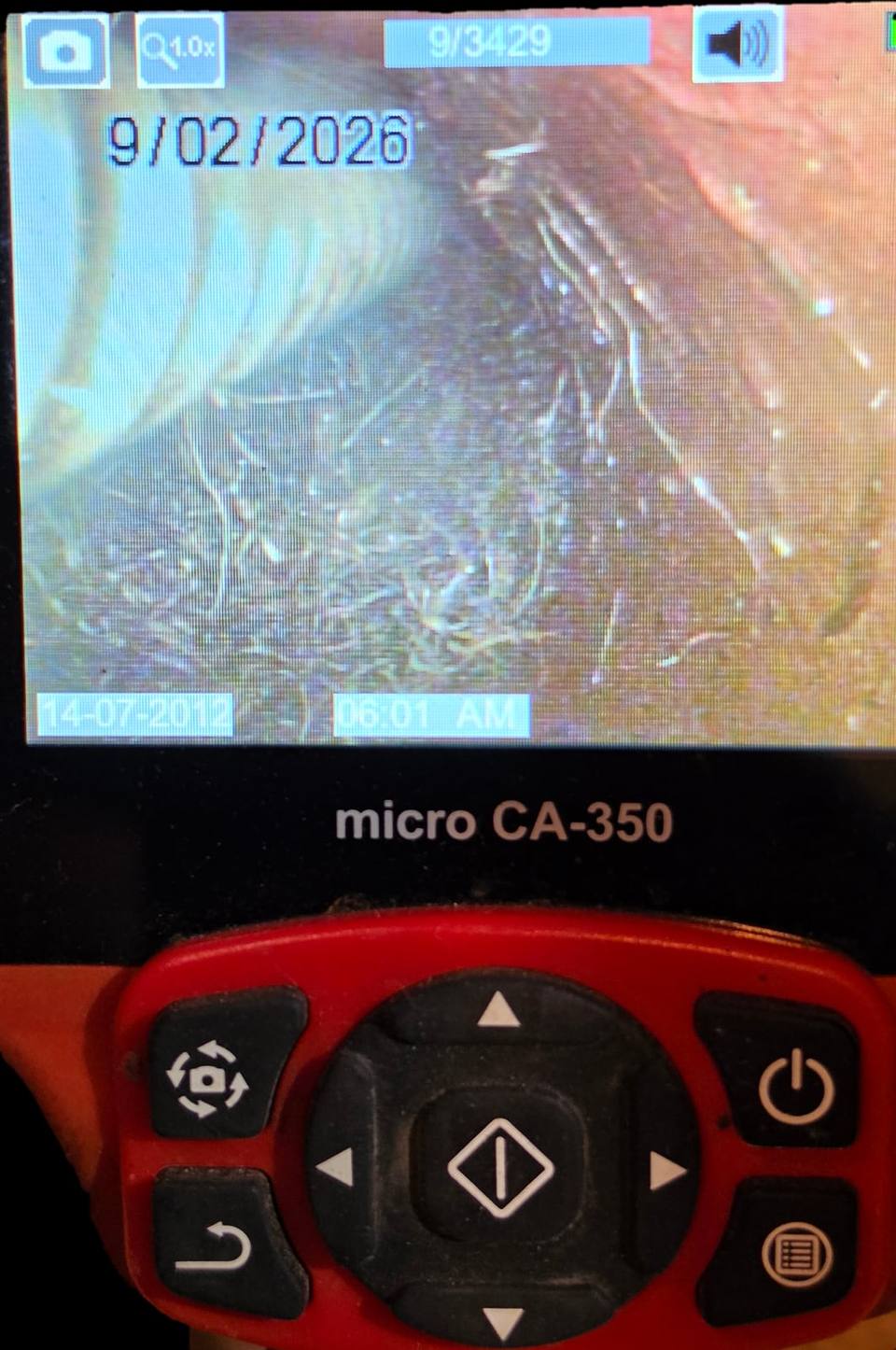
Roots get in through joints and cracks. A sewer pipe carries warm, nutrient-rich water, and a little of it escapes as moisture wherever the pipe isn’t sealed tight. Roots grow toward that moisture. The City of Surrey says roots can grow into your service connection through joints or cracks, and Metro Vancouver warns that they can pry open the joints between pipes.
A root starts as a thread thin enough to pass through a hairline gap. Inside the pipe it has water and food, so it branches into a mat. Toilet paper and grease snag on the mat until the line is blocked. Older lines made of short clay or concrete sections are the most exposed, because they have a joint every few feet.
What are the signs of tree roots in a sewer line?
The signs build slowly, then repeat. Watch for:
- Drains that are slow all through the house, not at one fixture.
- Toilets that gurgle or bubble when a tub or washing machine drains.
- A backup at the basement floor drain or the lowest toilet.
- A line that was cleared and blocked again a few months later.
- A patch of lawn over the sewer line that is greener or soggier than the rest.
A single slow sink is rarely roots. Roots live in the main line, so they affect everything upstream of them.
How do you get rid of tree roots in a sewer line?
A plumber cuts them out, then looks at what they did to the pipe. The usual first step is a drain machine with a cutting head that spins through the root mass and reopens the line. A hydro jetter can follow to flush out what the cutter left on the pipe wall.
The camera comes next, and it is the part that matters for the long run. It shows where the roots entered, how much of the pipe is affected and whether the pipe is cracked, shifted or collapsing. Ask for the recording.
Do tree roots grow back after the line is cleared?
Yes. Cutting removes the roots inside the pipe and leaves the tree, and the gap they came through, untouched. The City of Surrey uses this exact case as its example of a shortcut: roots are cut with an auger or root cutter, service is restored, and the problem may come back because roots regrow.
Surrey adds a second warning. Heavy, repeated cleaning with augers and root cutters can wear the pipe down until it fails. If you are clearing roots from the same spot every year, the pipe needs a repair.
What is the permanent fix for roots in a sewer line?
The permanent fix is to close the opening the roots use. That means repairing or replacing the damaged section of pipe, or replacing the whole line if the camera shows trouble along its length. New plastic sewer pipe has far fewer joints than old clay tile, and the joints are sealed.
Which one makes sense depends on what the camera shows. One bad joint near the house is a small dig. A line with roots at every joint is a bigger decision. Either way you should see the footage before you agree to anything.
Do root killers work in a sewer line?
A root killer can slow regrowth at best. It won’t open a line that is already blocked, and it does nothing about the cracked joint the roots came through. Anything you pour down a drain also ends up in the sewer system, so check with your city before using a chemical product.
Who is responsible for tree roots in a sewer line?
It depends on the city. In Vancouver, the cause of a blockage decides who pays, and tree roots are one of the causes the City names. The page doesn’t say who pays for root blockages as a rule, so the City crew’s finding on the day is what counts.
In Surrey, the location of the blockage usually decides. Roots in the pipe on your side of the property line are yours to deal with. Surrey leaves it to the owner to choose a long-term fix for problems on the private side.
If you think a tree on city land is the source, tell your city and ask how it handles that. Our guide on sewer backups and who pays has the phone numbers for Vancouver, Surrey, Burnaby and North Vancouver.
Does home insurance cover tree root damage to a sewer line?
Don’t count on it. The Insurance Bureau of Canada says home insurance is meant to cover sudden and accidental loss, and that sewer backup damage typically needs optional coverage. Roots take years to block a pipe, which is hard to call sudden. Ask your broker how your policy treats both the pipe repair and any water damage inside the house.
How do you keep roots out of your sewer line?
Know where the line runs and keep thirsty plants away from it. Metro Vancouver advises against planting water-loving trees or shrubs on top of your sewer line or drain pipes. Surrey tells owners not to plant trees, shrubs or other large plants over the service connection.
Beyond planting:
- Have the line inspected by camera. Metro Vancouver recommends at least once a decade.
- Install an outside clean-out if the house doesn’t have one, so the line can be reached without pulling a toilet.
- If your house has had several backups, ask about scheduled cleaning. Vancouver runs a preventative maintenance program for some properties that back up often.
When to call a plumber
Call a plumber when:
- Several drains are slow or gurgling at the same time.
- Sewage has come up at a floor drain or basement toilet.
- The line has blocked more than once in a year.
- You’re buying a house with mature trees between it and the street.
DrainX clears blocked sewer lines and runs camera inspections so you can see what is in the pipe before deciding on a repair. Tell us how often the line has backed up and when it was last cleared.
Sources
- Sanitary Sewer Maintenance for Property Owners , City of Surrey
- Sanitary Sewer Issues , City of Surrey
- Reducing Water in the Sewer System , Metro Vancouver
- Water and sewer repair costs , City of Vancouver
- Scheduled sewer connection cleaning , City of Vancouver
- Water Damage and Flood Protection , Insurance Bureau of Canada