
Poly-B plumbing in BC: how to tell if you have it
By DrainX Plumbing · Updated
Short answer
Poly-B is flexible plastic water pipe, usually light grey, installed in Canadian homes from the late 1970s to the mid-1990s. Check exposed pipe under a sink or at the hot water tank for a stamp such as PB2110 or CSA-B 137.8. It is no longer listed in plumbing codes, and insurers may add a surcharge or set a deadline to replace it.
What is Poly-B plumbing?
Poly-B is short for polybutylene, a flexible plastic pipe that was used for hot and cold water lines inside houses. It was cheaper than copper and quick to install. A Government of Alberta safety bulletin says it reached the construction industry there in the mid-1970s and was installed in homes and commercial buildings across Canada.
Sources give slightly different years for when it was common. Square One, a home insurer, says from about 1978 until the mid-1990s. Westland Insurance, a BC broker, says most commonly between 1978 and 1997. If your house was built or heavily renovated in that stretch, it is worth a look.
How do you tell if your house has Poly-B?
Look at the water pipes wherever they are exposed and check the colour, the feel and the stamp. Square One suggests looking under sinks, at the water meter, at the hot water tank and along the ceiling of an unfinished basement.
Start with the colour. Most Poly-B is light grey, though Westland says it can also be blue, white or red, and Square One mentions black. It is a flexible plastic that bends in gentle curves, where copper is rigid metal.
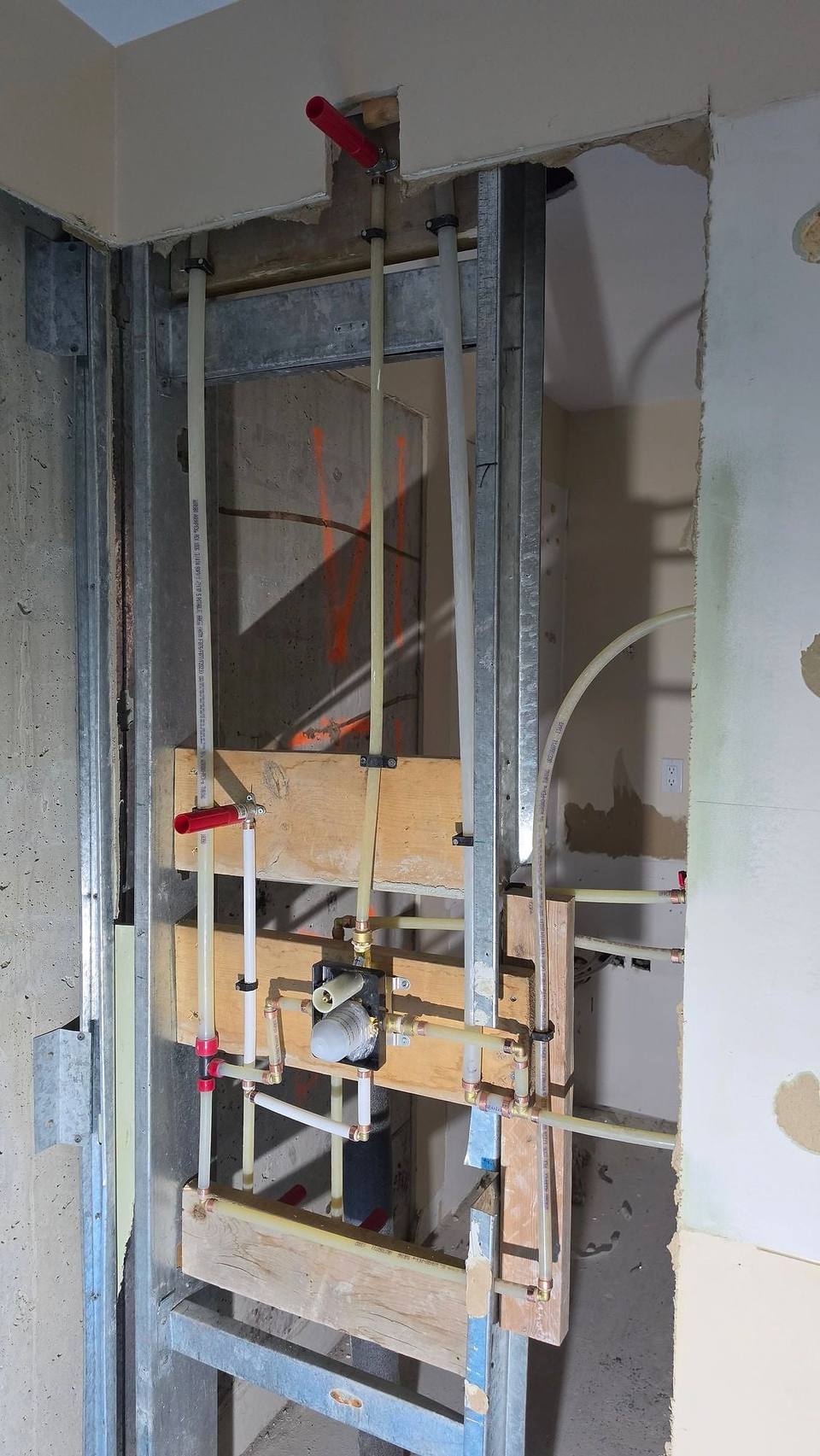
Then look for the stamp. Square One says Poly-B usually carries a code printed along the side, either PB2110 or CSA-B 137.8. The Alberta bulletin adds that the markings show the pipe size, the maker’s name and a date code. Lengths of pipe are joined with plastic or copper fittings, held by metal bands crimped around the pipe.
A missing stamp doesn’t clear the pipe. Square One notes that pipe matching the rest of the description could still be Poly-B, so have a plumber look if you can’t tell.
Is Poly-B the same as PEX or Kitec?
No. PEX is the flexible plastic pipe used in most new homes, often red for hot and blue for cold, with its own printed markings. Poly-B is an older, different plastic. A grey pipe stamped PB is Poly-B. A red, blue or white pipe stamped PEX is not.
Kitec is a third product, a plastic pipe with a layer of aluminum inside it, usually orange for hot and blue for cold. It has its own record of failures and insurers ask about it too, but it is not Poly-B.
Why does Poly-B leak?
Poly-B fails at the fittings and from the inside of the pipe. Square One gives three reasons:
- The fittings deteriorate. Plastic fittings crack with age, and bands crimped too tight can crack the pipe.
- The pipe is sensitive to water pressure and heat, which a house plumbing system puts on it every day.
- Chlorine in municipal water slowly breaks down the plastic.
The Alberta bulletin also reports that plastic insert fittings and aluminum bands are more prone to failures that cause leaks. Because the damage starts inside, Square One warns that a pipe can look fine from the outside and still be close to splitting.
Is Poly-B banned in Canada?
Poly-B is no longer listed in the current plumbing codes, according to the Government of Alberta, so it can’t be used in new plumbing work. That is different from an order to remove it. Being dropped from the codes doesn’t force pipe out of an existing house. For most owners the pressure to replace it comes from leaks, a sale or an insurer.
What do insurers do about Poly-B in BC?
Insurers treat Poly-B as a higher risk for water damage, and their response varies. Westland Insurance lists what an insurer may do when a home has it:
- Add a surcharge to the premium.
- Give you a deadline to have the Poly-B replaced.
- Decline to offer water damage coverage.
- Decline to offer any property coverage.
If your broker asks about your plumbing, answer accurately, then ask what the insurer needs from you and by when. Get that in writing before you spend money on a repipe.
Is Poly-B with copper fittings OK?
Copper or brass fittings remove one weak point, but the pipe itself still ages. Square One says swapping plastic fittings for copper or brass can extend the life of a Poly-B system. It also says most experts consider replacing the whole system the better fix, since the pipe wall degrades from the inside whatever the fittings are made of.
Can you still claim under the Poly-B class action?
No. The class actions over Poly-B closed years ago. The Alberta bulletin gives the claims deadline as May 31, 2005, or up to 15 years after the date of installation. Square One says owners who still have Poly-B now pay for replacement themselves.
What can you do until the Poly-B is replaced?
You can lower the risk while you plan the work. Square One suggests having a plumber replace plastic fittings with copper or brass, checking that the bands aren’t over-crimped, and reducing the water pressure in the house with a pressure reducing valve.
Three simple habits help as well:
- Learn where your main water shut-off is and check that it turns. Our guide on shutting off the main water supply shows how.
- Look at exposed pipe and fittings now and then for drips, white crust or stains.
- Shut the water off at the main when you leave for a long trip.
How is Poly-B replaced?
Poly-B is replaced by repiping: running new supply lines through the house and taking the old pipe out of service. A plumber maps where the lines run, opens walls and ceilings where there is no other way in, runs the new pipe, then switches the house over and pressure tests it.
How long it takes and what it costs depend on the size of the house, the number of bathrooms and how easy the pipe is to reach. A bungalow with an unfinished basement is a simpler job than a three-storey house with finished ceilings. Ask for the scope and the cost in writing, including who patches the drywall.
When to call a plumber
Call a plumber when:
- You’ve found grey plastic pipe and can’t read the stamp.
- A fitting is dripping, or a stain has appeared on a ceiling or wall below a bathroom.
- Your insurer has asked you to confirm the pipe type or set a replacement deadline.
- You’re buying a house built or renovated between the late 1970s and the mid-1990s.
DrainX does full repiping and leak and pipe repair across Vancouver and the Lower Mainland. Estimates are free, and you hear the cost before any work starts.
Sources
- Safety Tips: Polybutylene (Poly-B) Pressure Water Piping , Government of Alberta
- Poly-B plumbing: the complete guide , Square One Insurance Services
- Has your broker asked if you have Polybutylene (Poly-B) plumbing? , Westland Insurance