
Water leak in a BC strata: who repairs it and who pays
By DrainX Plumbing · Updated
Short answer
In a BC strata, the strata corporation repairs common property, which can include pipes between units and pipes that serve other units. Owners repair their own strata lot unless the bylaws say otherwise. If you are responsible for the damage, the strata can recover its insurance deductible from you, so check your own policy covers it.
Which pipes in a strata are common property?
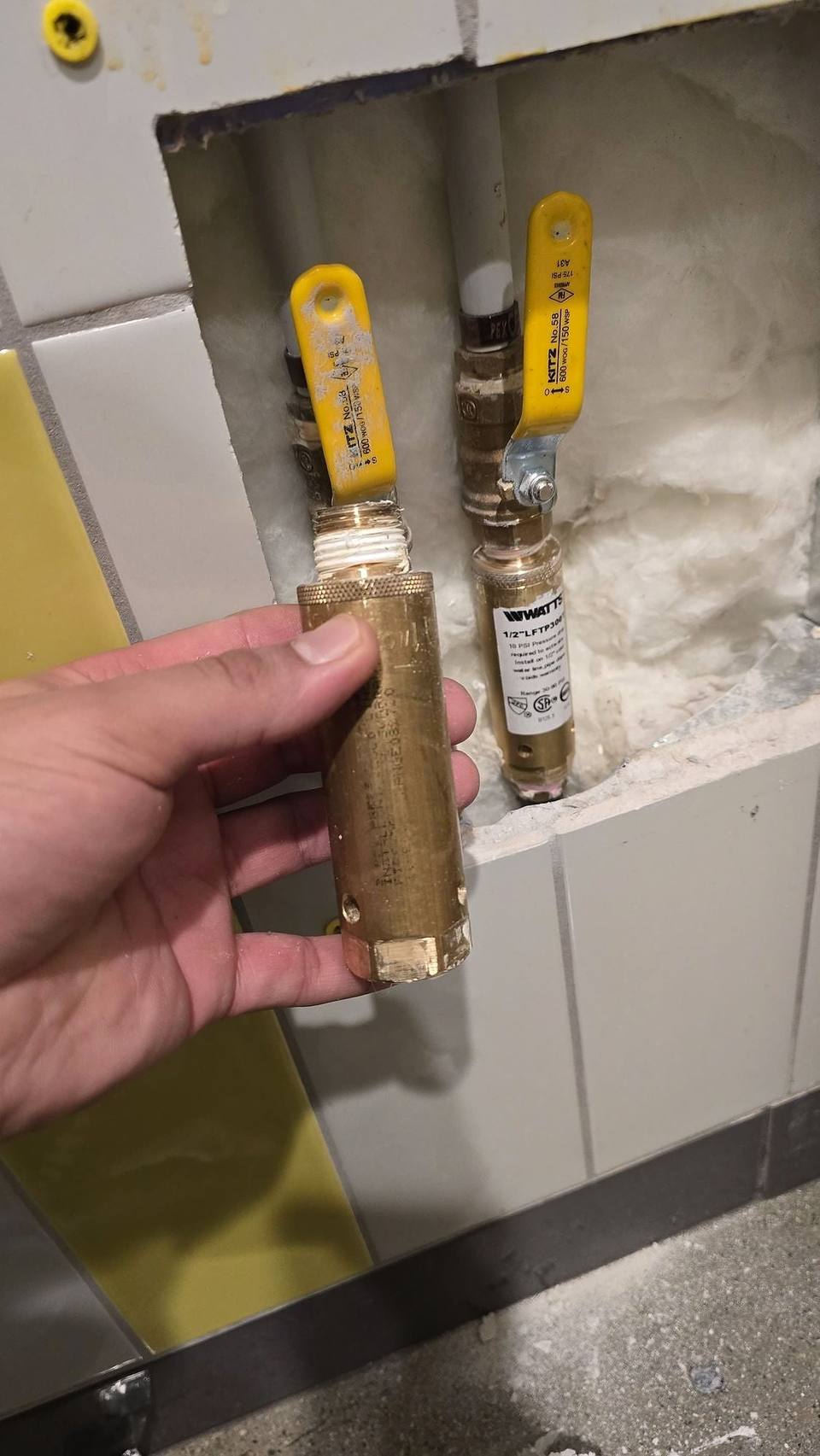
It depends on where the pipe is and what it serves. The Strata Property Act counts pipes and other facilities for water as common property when they run inside a floor, wall or ceiling on the boundary between strata lots, or between a strata lot and common property. A pipe inside your unit is common property too if it can be and is meant to be used by another strata lot.
Unless the strata plan says otherwise, the boundary between units runs through the middle of the shared walls, floors and ceilings. So the supply line under your kitchen sink is usually part of your strata lot, while the riser in the wall that feeds the units above is usually common property. The government’s own guidance says pipes “may” be common property, so the strata plan decides each case.
Who repairs a leak in a strata?
The strata corporation must repair and maintain common property and common assets. Owners repair and maintain their own strata lot, except for work that is the strata’s responsibility. That is the standard bylaw, and it applies unless your strata has registered different bylaws.
Bylaws can move some of this around. A strata can make an owner responsible for limited common property they use, such as a balcony, and it can take on repairs to specified parts of the strata lots. The government notes that who arranges a repair and who pays for it are separate questions, and that the split varies a lot between stratas. Read your strata’s registered bylaws before you assume either way.
What should you do first when water is leaking in a strata?
- Stop the water if you can. Close the valve under the sink or behind the toilet, or the shut-off for your unit. Our guide on shutting off the water shows where to look.
- Tell the strata council or the property manager right away, and your insurance broker. The government’s strata insurance page says to contact both immediately after a loss.
- Let the strata in. The standard bylaws allow entry without notice in an emergency, to keep people safe or prevent significant damage.
- Take photos of the leak and the damage before anything is cleaned up.
If the water is coming from the unit above, tell the strata straight away even if you can’t reach your neighbour. Council members can spend money on common property repairs that are needed immediately.
Who pays the strata’s insurance deductible?
The deductible on a strata insurance claim is normally a common expense, paid through strata fees. But the Act lets the strata sue an owner to get it back if that owner is responsible for the damage. The government’s guidance says an owner can be found responsible even without being at fault, and gives a broken dishwasher hose that floods common property and other units as an example.
This matters because strata deductibles are large. The government’s page says they can range from $100,000 to $750,000 or more. The strata has to tell owners when its deductible goes up.
Does your own insurance cover the deductible?
It can, if you have the right cover. The strata’s insurance does not pay its own deductible. An owner’s policy can cover the strata’s deductible when the owner is found responsible, and the government strongly advises every strata owner and tenant to have their own insurance. Ask your broker whether your policy covers a deductible as large as your strata’s, and about water damage and sewer backup cover, which are often extras.
Where do strata leak disputes go?
To the Civil Resolution Tribunal. The CRT handles most strata disputes in BC, of any amount, including disagreements over repairs and charge-backs. Its Solution Explorer walks through the options before you file anything. The government’s pages are not legal advice, and neither is this guide, so for a large claim talk to a lawyer.
How can you lower the risk of a leak in your unit?
Things to keep an eye on in your unit:
- The supply hoses to the washing machine and dishwasher.
- The hot water tank, if your unit has its own. See our guide on a leaking water heater.
- The valves and supply lines under sinks and behind toilets.
- Old pipe such as Poly-B or Kitec. See our guides on Poly-B and Kitec.
Know where your unit’s shut-off is before you need it.
When to call a plumber
Call a plumber, or ask your property manager to, when:
- Water is coming through a ceiling or wall and you can’t find the source.
- A shut-off valve won’t close or is leaking itself.
- You need to know whether a leak is in your unit’s pipes or in common property.
- The strata has asked you to repair a leak in your unit.
DrainX traces leaks to where they start and repairs the pipe or fitting, for owners, strata councils and property managers. Tell us the building, the unit and whether the strata already knows about the leak.
Sources
- Strata Property Act , Province of British Columbia
- Strata Property Act, Schedule of Standard Bylaws , Province of British Columbia
- Common property and limited common property , Government of British Columbia
- Paying for repair and maintenance , Government of British Columbia
- Strata owner and tenant insurance , Government of British Columbia
- Strata disputes , Civil Resolution Tribunal