
How long does a hot water tank last? Signs it's failing
By DrainX Plumbing · Updated
Short answer
A hot water tank typically lasts 10 to 15 years, according to BC Hydro. FortisBC puts a standard gas tank at 10 to 12 years and says a tank over 10 years old could fail at any time. Rusty hot water, rumbling, less hot water than before and dampness around the base are signs a tank is near the end.
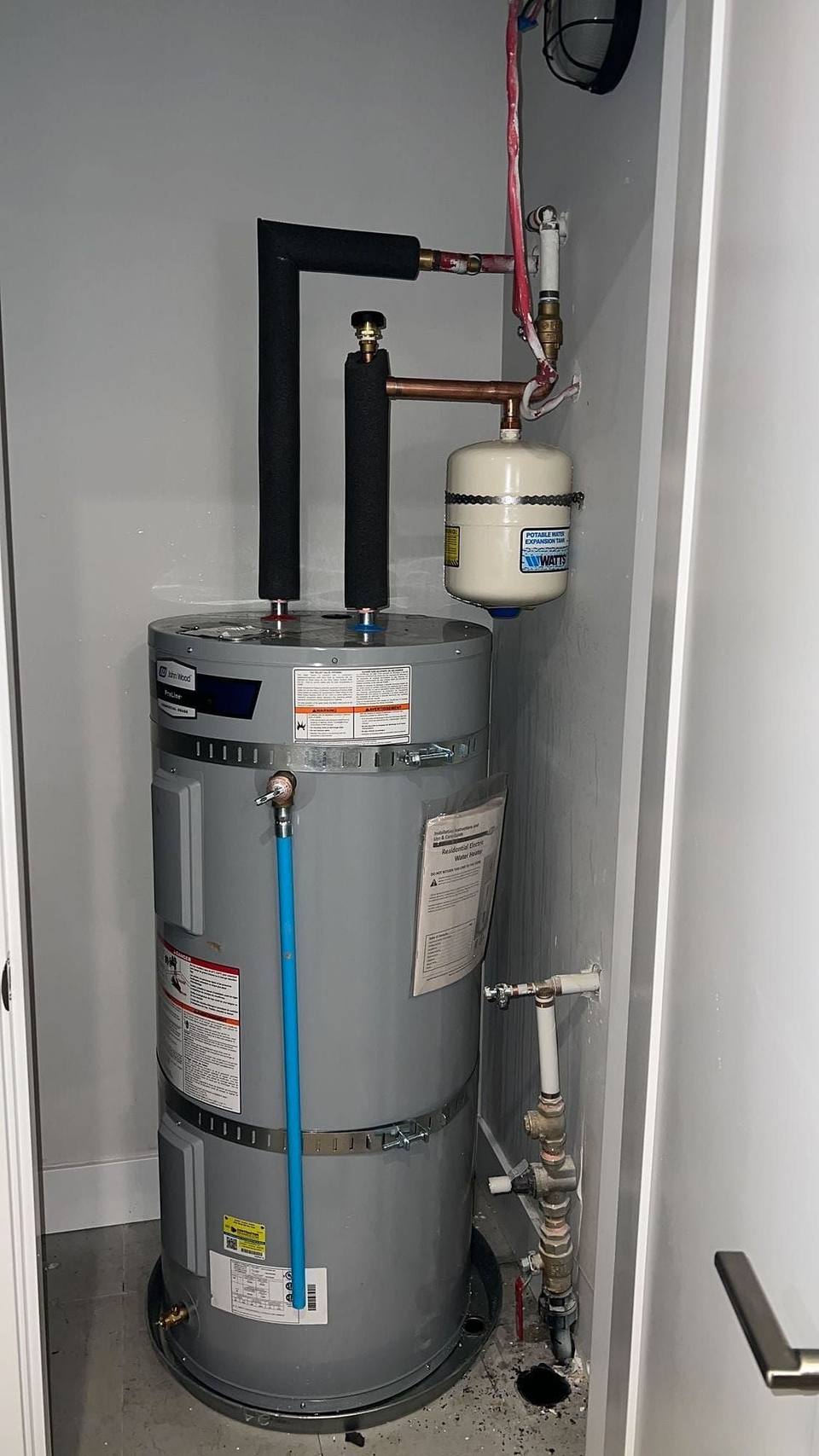
How long does a hot water tank last?
A hot water tank usually lasts 10 to 15 years. That is the figure BC Hydro gives for a typical water heater. FortisBC is a little more cautious about gas models: its comparison table puts a standard gas storage tank at 10 to 12 years and a condensing storage tank at 12 to 15.
Those are averages. Some tanks leak at eight years and some are still going at eighteen. What the numbers tell you is when to start watching.
How do you find out how old your hot water tank is?
Check the label on the side of the tank. BC Hydro says the serial number sits near the manufacturer’s label and can be looked up on the manufacturer’s website to find when the heater was built. On many tanks the first few characters of the serial number carry the year and month, though every maker formats it differently.
If there is an installation sticker or a permit tag on the tank, that date is useful too. The tank is at least that old.
What are the signs a hot water tank is failing?
Rust, noise, less hot water and moisture at the base are the signs to watch for.
- Rusty or brown water from the hot taps only, which suggests the inside of the tank is corroding.
- Rumbling or popping as the tank heats. Sediment on the bottom traps water under it, and the tank knocks.
- Hot water that runs out sooner than it used to. Sediment takes up room, and a failing element or burner heats more slowly.
- Dampness or rust around the base. Check the fittings on top first, since a drip from a connection can run down the jacket.
- Water at the end of the relief valve pipe.
The City of Surrey advises investigating, or calling a plumber, if there is any water around the tank or at the floor drain from the overflow tube.
Water pooling under the tank itself is the last sign. FortisBC puts it bluntly: a leaking storage tank can’t be fixed. Our guide on a leaking water heater covers what to do in the first few minutes.
Should you replace a hot water tank before it fails?
If the tank is past 10 years and sits near finished floors or walls, replacing it on your own schedule is usually the safer choice. FortisBC warns that a standard storage tank that is 10 or more years old could fail at any time, and recommends researching a replacement before that happens. Natural Resources Canada suggests upgrading to an ENERGY STAR certified model once a water heater is more than 10 years old.
A planned swap lets you pick the type and size you want and book it for a weekday. An emergency swap happens after the floor is already wet, with whatever tank is in stock.
A tank in an unfinished garage with a floor drain beside it is a smaller gamble. Plenty of owners run those until they show signs.
What shortens the life of a hot water tank?
Corrosion and sediment do most of the damage. Inside a steel tank, a metal rod called an anode corrodes in place of the tank wall. Once the anode is used up, the tank starts to rust. Sediment on the bottom makes a gas burner work harder and can bury the lower element in an electric tank.
High water pressure adds stress to the tank and its fittings, and so does setting the temperature higher than you need.
Can you make a hot water tank last longer?
A little maintenance helps. None of it is complicated, but if a valve hasn’t been touched in ten years, let a plumber do it, because old drain valves and relief valves sometimes don’t reseal.
- Drain a few litres from the valve at the bottom of the tank once a year to carry sediment out.
- Have the anode rod checked every few years and replaced when it is worn down.
- Keep the thermostat in the range BC Hydro recommends, between 60°C and 65°C.
- Look over the tank, valves and connections for rust or moisture when you change the furnace filter.
For a gas tank, FortisBC recommends annual service by a licensed gas contractor.
What temperature should a hot water tank be set to?
Between 60°C and 65°C, according to BC Hydro. It notes that the Public Health Agency of Canada recommends at least 60°C to stop bacteria growing in the tank, and suggests staying under 65°C to keep energy bills down.
Water that hot can scald. BC Hydro says a mixing valve installed between the tank and your fixtures limits the temperature at taps and showers to 49°C, and that it needs professional installation.
Should you repair or replace a hot water tank?
Repair it when a part has failed, and replace it when the tank has. Heating elements, thermostats, gas controls, relief valves and leaking connections can all be swapped. A tank that is rusting through can’t be saved.
Age tips the decision. Putting a new part into a 13-year-old tank often buys only a short stretch before the next problem. If you’re replacing, our guide on tank versus tankless water heaters compares the two.
Do you need a permit to replace a hot water tank?
For a gas water heater, yes. Technical Safety BC says a gas permit is required for installing or replacing gas appliances, water heaters included, and that a licensed contractor applies for it on your behalf. It suggests checking that the permit is in place before work begins.
Rules for electric tanks and for plumbing permits vary by municipality, so ask your installer which permits apply at your address.
Are there rebates for a new water heater in BC?
Sometimes. BC Hydro, FortisBC and the province’s CleanBC program have all offered rebates on high-efficiency water heaters, and the amounts and conditions change often. Check each program’s current page before you buy, because some rebates only apply to certain models or require a licensed contractor’s invoice.
When to call a plumber
Call a plumber when:
- There is water under or around the tank.
- The hot water has turned rusty, or it runs out much sooner than it used to.
- The tank is rumbling or banging as it heats.
- The tank is more than 10 years old and you’d like it checked before it fails.
DrainX repairs and replaces hot water tanks and works on both tank and tankless units. If the tank is leaking now, close the cold water valve above it and call or text us at any hour.
Sources
- Water heaters , BC Hydro
- Tank or tankless? How to find your perfect match in a water heater , FortisBC
- Water heaters infographic , Natural Resources Canada
- Detecting Water Leaks , City of Surrey
- Homeowner Gas Permits , Technical Safety BC
- Appliance maintenance and safety , FortisBC