
Tank or tankless water heater: which suits your Metro Vancouver home?
By DrainX Plumbing · Updated
Short answer
A tank suits households that often run several hot taps at once. A tankless unit suits homes that are short on space and rarely do. Tankless units heat water only as it flows, while tanks keep a stored supply hot. Your gas piping and venting can also tip the decision.
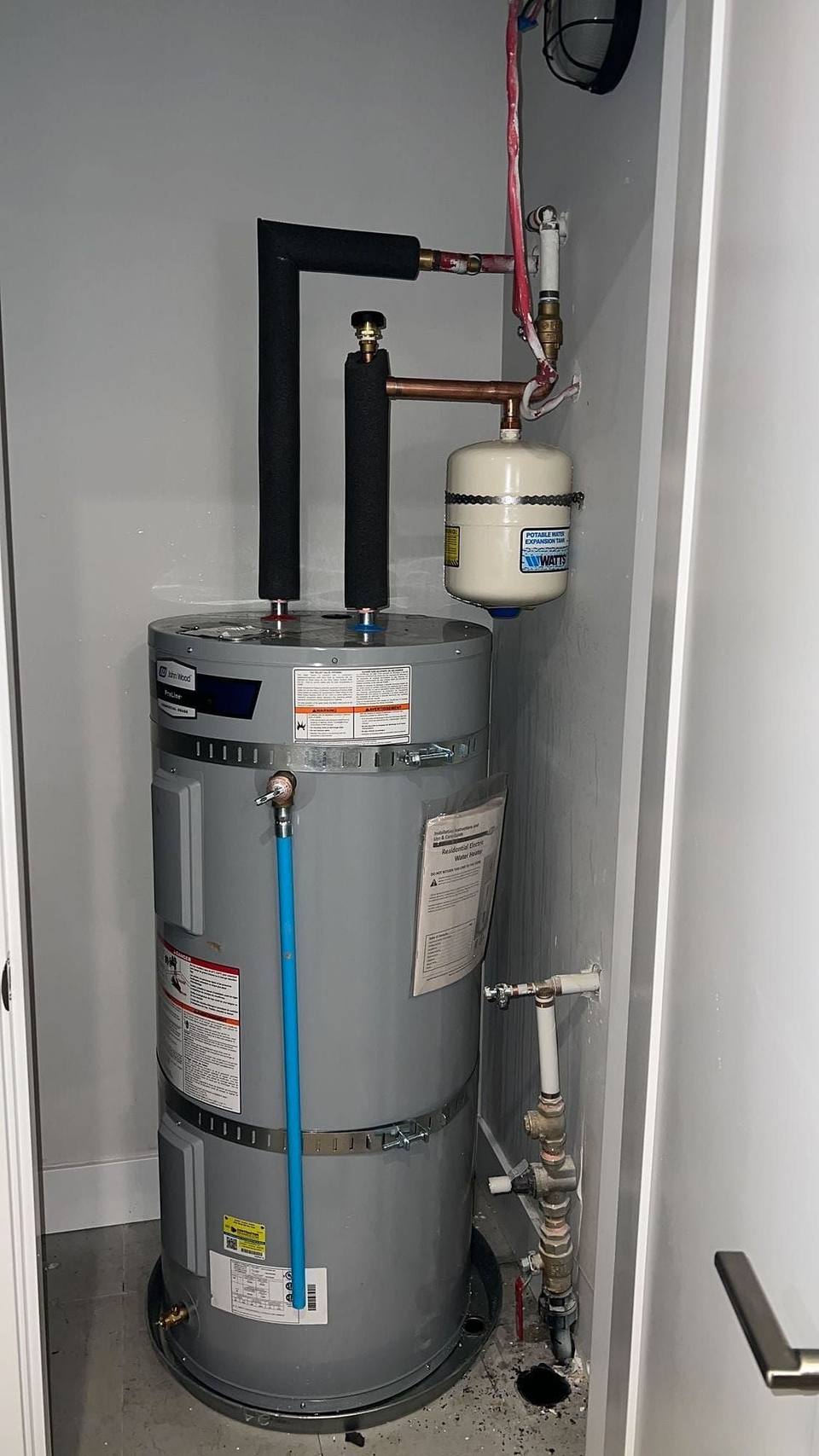
How does a tank water heater work?
A tank water heater stores water and keeps it hot, so hot water is usually available when you open a tap. As you draw hot water, cold water refills the tank and a thermostat switches on the burner or element to reheat it. Because the tank is always kept hot, it uses energy even when nobody is running a tap (Natural Resources Canada).
How does a tankless water heater work?
A tankless water heater has no storage tank and heats water only while it flows through the unit. It uses either a gas burner or an electric element (Natural Resources Canada). You’ll also hear them called on-demand or instantaneous water heaters.
Will a tankless water heater run out of hot water?
A tankless unit won’t run out the way a tank does, but it can only heat so much water at one time. If several people in your home shower at once, the demand could be more than a tankless system can provide (Natural Resources Canada). You’ll notice it as cooler water or weaker flow. With a non-condensing tankless unit, hot water can also take a few more seconds to reach the tap than with a tank (FortisBC).
With a tank, you get full flow at every tap until the stored hot water runs out, and then you wait while it reheats.
Before you buy a tankless unit, Natural Resources Canada recommends having an experienced plumber estimate your home’s hot water demand.
Does a tankless water heater use less energy?
A tankless water heater usually uses less energy than a standard storage tank, because it isn’t keeping a tank of water hot around the clock. According to Natural Resources Canada, an ENERGY STAR certified tankless water heater uses 30% less energy, on average, than a storage tank type. Your own savings depend on your household’s hot water use.
How much space do tank and tankless water heaters need?
A tankless unit needs less room than a tank, which sits on the floor and needs earthquake straps. A non-condensing tankless unit can hang on a wall (FortisBC).
Under the BC Building and Plumbing Codes, hot water tanks have to be securely strapped (FortisBC).
Do you need new gas piping or venting for a tankless water heater?
Sometimes, because a gas tankless unit pulls a lot of gas in short bursts. In an older home, FortisBC advises having a gas contractor inspect the piping from the meter, since the unit may need piping with more capacity.
Some high-efficiency gas models may need to vent through a side wall, and condensing tankless models need access to a drain for the condensate (FortisBC). Both can add to installation costs. For an electric model, have a licensed electrician confirm your panel can support it first.
Do you need a permit to switch to a tankless water heater?
Usually, yes. Technical Safety BC says most regulated work needs a permit in place before it starts, and it lists installing or replacing a water heater among the gas work a permit covers. Depending on where you live, your permit may be issued by Technical Safety BC or by your municipality. If you hire a licensed contractor, they get the permit on your behalf.
Do tank and tankless water heaters work in a power outage?
A standard gas tank keeps giving you hot water when the power goes out, but most non-condensing tankless models won’t work, according to FortisBC. FortisBC adds that ENERGY STAR and condensing gas storage tanks need electricity for their electronic ignition, so they won’t heat water during an outage either, and neither will electric tanks or heat pump water heaters. Condensing tankless units need power too, so check which kind you have.
How do you maintain a tank or tankless water heater?
Both types need regular servicing, and a tankless unit also needs its heat exchanger flushed of mineral scale (descaling). FortisBC recommends annual service by a licensed gas contractor for gas appliances, and its checklist for a tankless service includes that flush. Natural Resources Canada suggests having a tankless water heater serviced once every year or two by a qualified professional. Between visits, check the tankless unit’s outside fresh air vent for debris or snow.
On a tank, sediment settles at the bottom over time and the anode rod that slows corrosion wears down.
How long do tank and tankless water heaters last?
A non-condensing tankless water heater can last up to 20 years, compared with 10 to 12 years for a standard gas storage tank, according to FortisBC. Installation and upkeep affect how long yours lasts.
What should you ask before switching to tankless?
Get answers to these from whoever quotes the job:
- What size unit covers the showers and taps we run at the same time?
- Does a gas contractor need to check the piping from the meter first?
- Where will the unit vent outside, and will the vent end up near a window or a neighbour’s house?
- If it’s a condensing model, where will the condensate drain go?
- Who is applying for the permits, and who issues them where we live?
- How often will the unit need descaling, and who will do it?
- How will we get hot water during a power outage?
What should you do if you smell gas near your water heater?
Leave the building and call for help from outside. FortisBC gives these steps:
- Stop what you’re doing. Don’t use your cellphone, smoke, light a match, flip any electrical switches or do anything else that could make a spark or flame.
- Go outside, leaving the door open behind you.
- Once you’re outside, call the FortisBC emergency line or 911.
Stay out, and don’t try to find the leak yourself.
When to call a plumber
Call a plumber if your water heater is leaking or has stopped making hot water. DrainX repairs and installs tank and tankless water heaters and can help you pick a type when your old unit needs replacing.
If a tank is leaking onto the floor and you can safely reach the cold water valve on the pipe feeding it, close it. Water coming from the tank can be very hot, so keep your hands and feet out of it. Stay away from any cords or outlets near the water, and treat it as an emergency plumbing call. If you smell gas, follow FortisBC’s steps above before you call anyone else.
Sources
- Guide to residential water heaters , Natural Resources Canada
- Tankless water heaters , Natural Resources Canada
- Tank or tankless? How to find your perfect match in a water heater , FortisBC
- Appliance maintenance and safety , FortisBC
- Gas leaks and odours , FortisBC
- Home Modifications , Technical Safety BC